Compare mannanase and cellulase for plant cell-wall processing, gum viscosity reduction, feed digestibility, extraction yield, and formulation decisions.
Request pricingPlant materials are not one substrate. They are composite structures: cellulose microfibrils, hemicellulose networks, soluble gums, proteins, starch, lignin, minerals, and process-derived complexes. Choosing between mannanase and cellulase starts with identifying which fraction is limiting flow, release, digestibility, or yield.
Buying for a plant or for resale? We supply mannanase in bulk to manufacturers and resellers on a quote basis; send the plant material, quantity and destination, and we tell you whether mannanase is the right starting point. Request a quote.
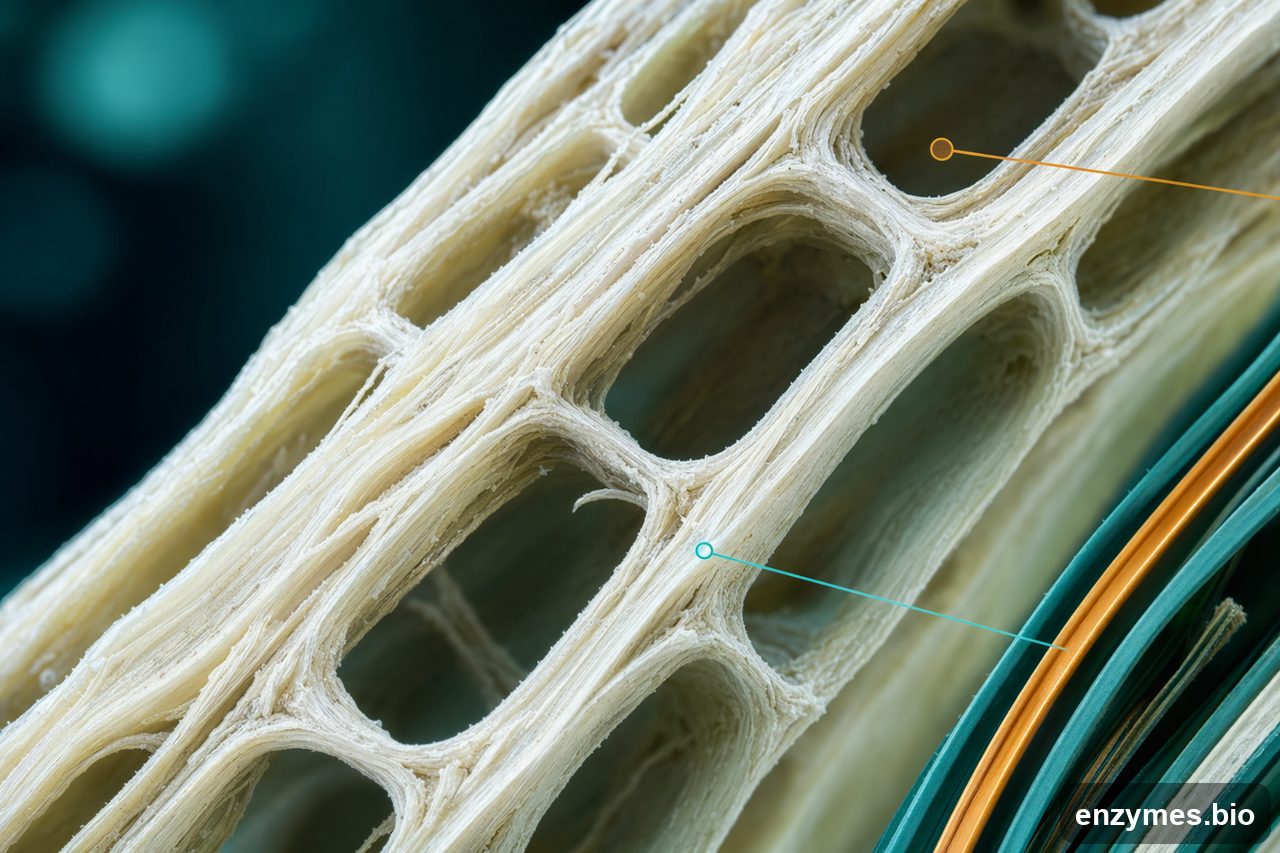
Endo-1,4-β-Mannanase targets β-mannan backbones found in galactomannan, glucomannan, and related hemicellulosic gums. Cellulase targets cellulose, the structural β-glucan framework that gives plant tissue strength. Both enzymes work on plant cell-wall materials, but they solve different problems.
For B2B formulation and processing teams, the practical question is not which enzyme is stronger. It is which polymer is creating the bottleneck.
Use mannanase when the problem is driven by β-mannans: viscous gums, anti-nutritional effects in feed, limited release from mannan-rich meals, or flow resistance caused by soluble hemicellulose.
Use cellulase when the problem is driven by cellulose: fibrous structural material, poor disintegration of plant particles, or limited accessibility inside cellulose-rich biomass.
Use a mannanase-cellulase blend when the material contains both mannan-rich hemicellulose and cellulose barriers, and when process testing shows that opening one fraction improves access to the other.
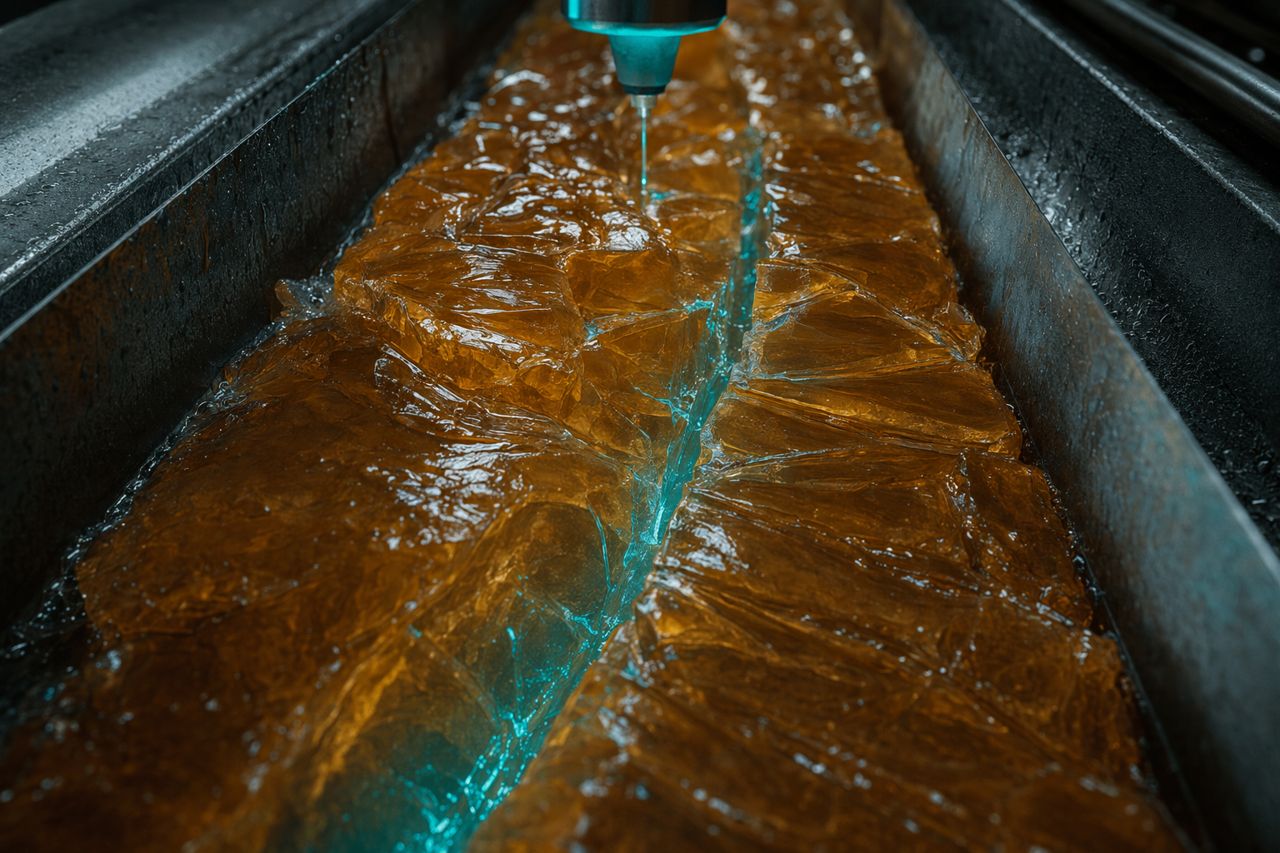
Mannanase cleaves internal bonds in β-mannan chains. In industrial terms, it helps convert a thick, water-binding polymer network into smaller, less obstructive fragments.
Typical outcomes include:
Mannanase is often the more direct choice when the material feels chemically “gummy” rather than simply fibrous.
Cellulase systems act on cellulose, the crystalline and amorphous structural carbohydrate in plant cell walls. Cellulase is selected when the target is tissue breakdown, fiber loosening, or access to compounds trapped behind cellulose-rich structures.
Typical outcomes include:

Cellulase is usually the stronger fit when the material is structurally tough, woody, fibrous, or resistant to mechanical breakdown.
| Processing question | Better first enzyme to screen | Why it matters |
|---|---|---|
| Is the material rich in guar, locust bean gum, konjac, palm kernel meal, copra meal, or mannan-containing hemicellulose? | Mannanase | The limiting polymer is likely β-mannan rather than cellulose. |
| Is the main issue high viscosity or poor flow? | Mannanase | Soluble β-mannans can create strong water-binding networks. |
| Is the main issue intact fibrous plant structure? | Cellulase | Cellulose provides mechanical reinforcement in many plant tissues. |
| Is the target improved feed efficiency from mannan-rich ingredients? | Mannanase | β-mannans can interfere with nutrient access and gut performance. |
| Is the target botanical extraction from leaf, stem, hull, or peel materials? | Cellulase or blend | Cellulose may block access; mannanase helps if hemicellulose gums are present. |
| Does viscosity drop, but solids remain resistant? | Add cellulase to mannanase screening | The gum network may be opened while the cellulose frame remains. |
| Does fiber loosen, but liquid remains thick? | Add mannanase to cellulase screening | Cellulose may be disrupted while soluble mannan continues to control rheology. |
Mannanase is commonly screened for poultry, swine, aquaculture, and other compound feeds where β-mannan-containing ingredients contribute to inconsistent digestibility or viscosity-related performance drag. The goal is not simply fiber degradation; it is targeted reduction of a specific hemicellulose effect.
Mannanase is especially relevant when formulas include:
For feed technologists, the right screening question is: does β-mannan reduction improve the value of this ingredient in this formula?
Galactomannans and glucomannans can generate high viscosity at low inclusion. Mannanase is the more precise tool when the objective is controlled viscosity reduction without relying only on dilution, heat, or mechanical shear.
Use cases include:
In oilseed meals and plant protein processing, hemicellulose can restrict mass transfer, hold water, and reduce separation efficiency. Mannanase may improve process handling when mannan-rich fractions are present, especially in combination with mechanical conditioning and selected complementary enzymes.
Cellulase is often selected first for extraction from plant tissues where the main barrier is cell-wall integrity. If the material contains leaves, stems, husks, peels, hulls, pomace, or other structural fractions, cellulose may be a primary access barrier.
Cellulase screening is most useful when the desired outcome is:

Where the specification is linked to fiber breakdown, pulp modification, or biomass conversion, cellulase may be central. Mannanase can still be useful if hemicellulose is present, but it should be positioned around mannan chemistry rather than as a general fiber enzyme.
Many plant matrices contain both cellulose and hemicellulose. A blend can be justified when each enzyme removes a different constraint:
A blend should not be assumed by default. It should be proven against a clear target such as viscosity reduction, soluble solids release, feed performance, filtration rate, or extract yield.
For process engineers and formulation scientists, a clean screening plan prevents over-formulation.
Review ingredient composition, supplier data, historical processing behavior, and hydration profile. High viscosity points toward soluble gums. Structural toughness points toward cellulose-rich fiber.
If β-mannan is the likely constraint, start with mannanase. If cellulose structure is the likely constraint, start with cellulase. Specificity reduces noise in the trial.
Useful endpoints include:
If the first enzyme improves one parameter but leaves another constraint unresolved, screen the complementary enzyme. This keeps the formula lean and makes procurement decisions clearer.
Check performance under the actual process window: pH environment, thermal exposure, residence time, shear, water activity, premix conditions, and contact with salts, acids, surfactants, or preservatives.
Before selecting a supply route, request information that supports formulation confidence rather than generic enzyme claims.
Ask for:
Mannanase Enzyme Solutions focuses discussions on the application problem first: matrix, constraint, process window, and commercial target.
Mannanase and cellulase attack different polymers. A cellulase will not directly solve a β-mannan viscosity problem. A mannanase will not replace cellulase when the dominant barrier is cellulose structure.
“Plant-based” is too broad. A guar-thickened stream, a palm kernel meal, a soybean fraction, and a fibrous botanical extraction may each require a different enzyme strategy.
More enzymes can create more variables, more cost, and more regulatory documentation. Start specific, then expand only when the data support it.
Bench tests that ignore heat exposure, pH drift, shear, solids loading, or contact time can overstate performance. Keep the test close to the production reality.
Choose mannanase when β-mannan is driving viscosity, anti-nutritional effects, or restricted release. Choose cellulase when cellulose-rich structure is the dominant barrier. Use both only when the material and outcome data show that soluble hemicellulose and structural cellulose are both limiting performance.
For mannan-rich plant materials, Mannanase Enzyme Solutions helps teams define the screening logic, select the right enzyme format, and move from trial data to supply-ready specification.
We supply mannanase for plant-material processing in bulk to manufacturers, distributors and resellers, on a quote-only basis. To get a grade recommendation and a price, send the product or application, the quantity (trial lot, monthly or annual volume), the destination country, and the process step where the enzyme will be added. Form and pack size are quoted per order, and we tell you which documents are available for that grade.


Precision mannan breakdown for smoother industrial flow.
Tell us your application and volume — we reply with pricing and lead time.
We have received your message. We will reply by email.