Technical guide to Endo-1,4-β-Mannanase for detergent and cleaning formulations: gum-thickened stain removal, viscosity reduction, compatibility, formats, and validation priorities.
Request pricingEndo-1,4-β-Mannanase is used in detergent systems to cut through β-mannan and galactomannan gums: the thick, sticky polysaccharides found in many food, cosmetic, personal-care, and household residues. In cleaning language, mannanase helps convert elastic smear into removable fragments.
Buying for a plant or for resale? We supply mannanase for cleaning-product manufacturing to detergent makers, formulators and resellers on a quote basis; send the product format, quantity and destination. Request a quote.
For detergent developers, that matters because gum-thickened soils do not behave like simple oil, starch, or protein stains. They hold water, trap other soil components, increase drag at the fabric or surface interface, and can leave a dull film after washing. Mannanase gives the formula a targeted way to open that network.
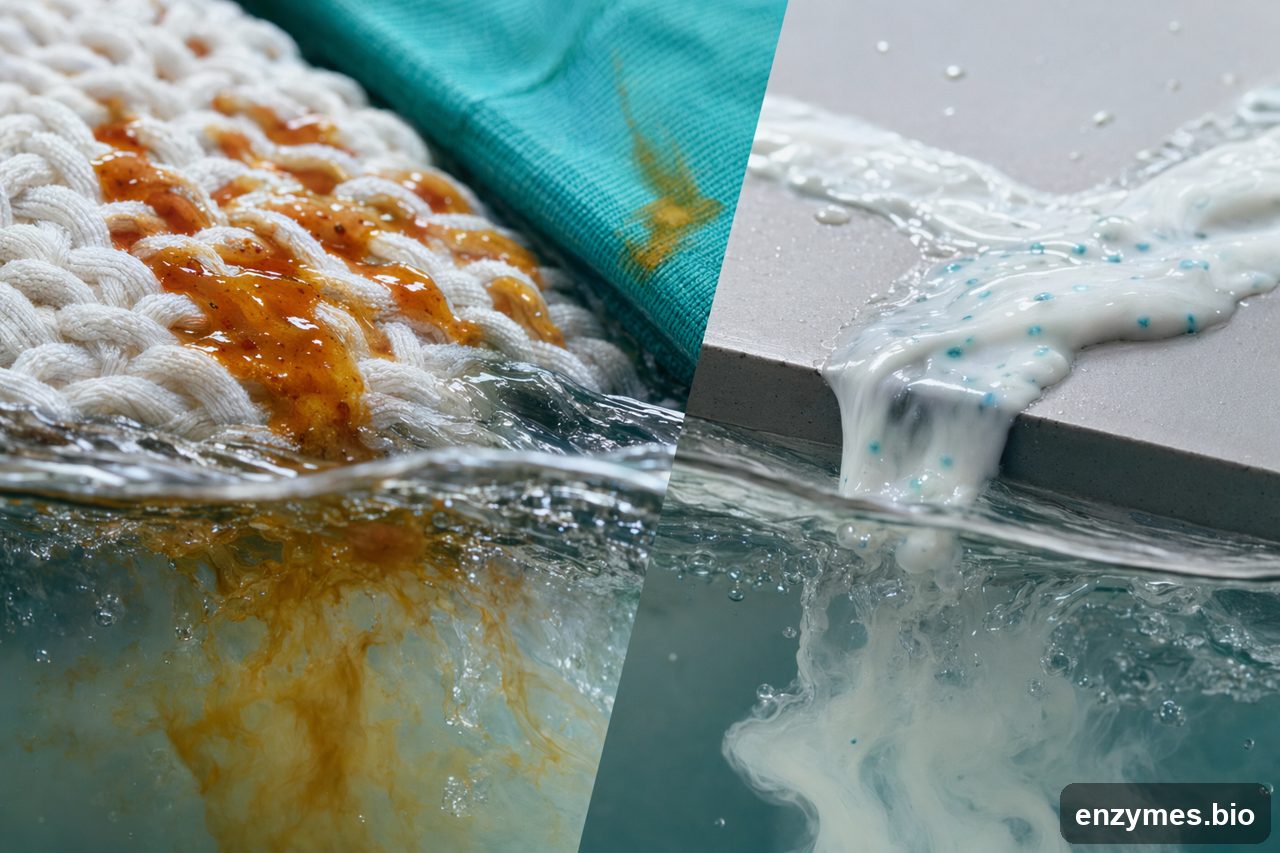
Mannanase Enzyme Solutions positions mannanase as a precision viscosity-break tool for laundry detergents, dish and surface cleaners, institutional cleaning products, and industrial wash systems where guar, locust bean, tara, or related mannan gums are part of the soil challenge.
Mannanase hydrolyzes internal bonds in β-mannan backbones. In practical cleaning terms, it weakens the gel-like structure of mannan-rich soils so mechanical action, surfactants, builders, and rinse water can work more effectively.
Key functional outcomes include:
Mannanase is not a general-purpose stain remover. It is most valuable when the residue contains mannan-type hydrocolloids or gum-stabilized matrices.
Mannan gums are widely used as thickeners, stabilizers, and texture modifiers. That makes mannanase relevant to detergent briefs involving:
The commercial value is not limited to visible stain removal. In some applications, the bigger gain is reduced film, improved rinse feel, less re-soiling risk, or cleaner equipment surfaces after repeated wash cycles.
Surfactants are strong at wetting, emulsification, and oily soil management. They are less direct against a hydrated gum network that behaves like a soft elastic film. Mannanase changes the soil architecture, giving the surfactant system more access.
Mannan-rich soils often carry fat, protein, colorants, minerals, and starch. By cutting the gum phase, mannanase can help the rest of the detergent system reach those embedded components.
Modern detergents are expected to clean with less water, lower temperature, shorter cycles, and compact dosing. Enzymes help deliver targeted chemistry without simply increasing alkalinity or surfactant load.

Mannanase can support claims around food stain removal, thickened sauce removal, anti-residue performance, and improved cleaning of gum-stabilized soils when properly validated against representative panels.
Mannanase can be considered for:
The right format depends on the base chemistry, manufacturing route, storage conditions, and expected consumer or institutional use case.
Mannanase performance is shaped by the surrounding formula. Before scale-up, formulation teams should screen compatibility with:
A mannanase that performs well in a simple buffer is not automatically the right enzyme for a built detergent concentrate. The commercial question is stability and cleaning contribution inside the real formula.
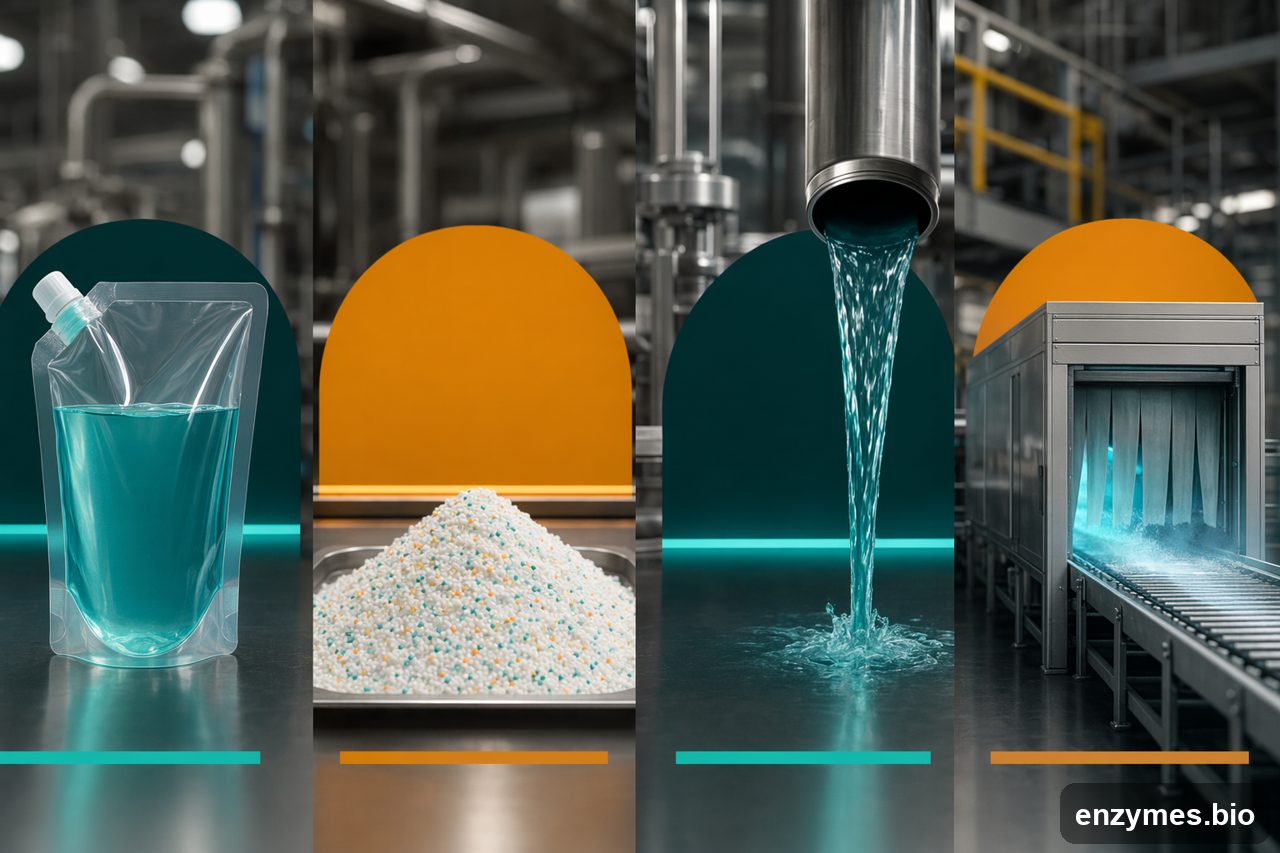
Liquid formats require close attention to storage stability, water activity, solvent exposure, preservatives, and interactions with surfactants. The enzyme must remain functionally intact through shelf life and still act quickly after dilution.
Powders may offer stronger separation from reactive liquid components, but the enzyme format must tolerate blending, handling, moisture exposure, and storage. Dust control and uniform distribution are important manufacturing considerations.
Unit-dose systems can concentrate chemical stress. Mannanase selection should consider compatibility with high-active matrices, film systems, plasticizers, solvents, and consumer storage conditions.
In professional systems, mannanase may be used to improve repeatability against food-service and hospitality soils. The development focus is typically wash program fit, residue control, and compatibility with automated dosing and cleaning-in-place expectations.
For detergent and cleaning applications, mannanase evaluation should be built around use-relevant performance rather than enzyme identity alone.
Recommended validation areas:
Target stain panels
Use soils that contain relevant mannan or galactomannan thickeners, not only generic food stains.
Mixed-soil behavior
Evaluate gum plus oil, gum plus protein, gum plus pigment, and gum plus starch systems.
Rheology shift
Confirm that the enzyme reduces viscosity or gel strength in the target soil matrix.
Fabric and surface release
Measure cleaning on the substrate that matters: cotton, polyester blends, dishware, stainless steel, tile, or polymer surfaces.
Residue and rinse assessment
Look beyond immediate stain fading. Residual tack, haze, and re-deposition can be commercially important.
Formula stability
Test the finished formulation under realistic storage, transport, and consumer-use conditions.
Enzyme-system balance
Verify that mannanase improves performance without compromising the contribution of other enzyme classes.
Mannanase is usually part of an enzyme system, not a replacement for the whole system.
The strongest formulations match enzyme biology to the stain architecture. Mannanase earns its place when gum-thickened residues are part of the performance gap.
When sourcing mannanase for detergent development, ask for more than a product name. Useful qualification data should address:
Avoid evaluating mannanase only on isolated enzyme strength. The better question is: does it deliver measurable cleaning value in your detergent architecture?
Consider a mannanase screen if your formula team is seeing:
These are often signs that the soil matrix is resisting removal, not simply that the surfactant level is too low.
Mannanase is most valuable when it is treated as a material-change tool. It opens dense gum networks, reduces smear resistance, and helps the cleaning system move soil from stuck to mobile.
For detergent and cleaning developers, the priority is not adding another enzyme for label breadth. The priority is targeted performance against a defined residue class, with compatibility proven in the finished formula.
We supply cleaning-grade mannanase in bulk to manufacturers, distributors and resellers, on a quote-only basis. To get a grade recommendation and a price, send the product or application, the quantity (trial lot, monthly or annual volume), the destination country, and the process step where the enzyme will be added. Form and pack size are quoted per order, and we tell you which documents are available for that grade.

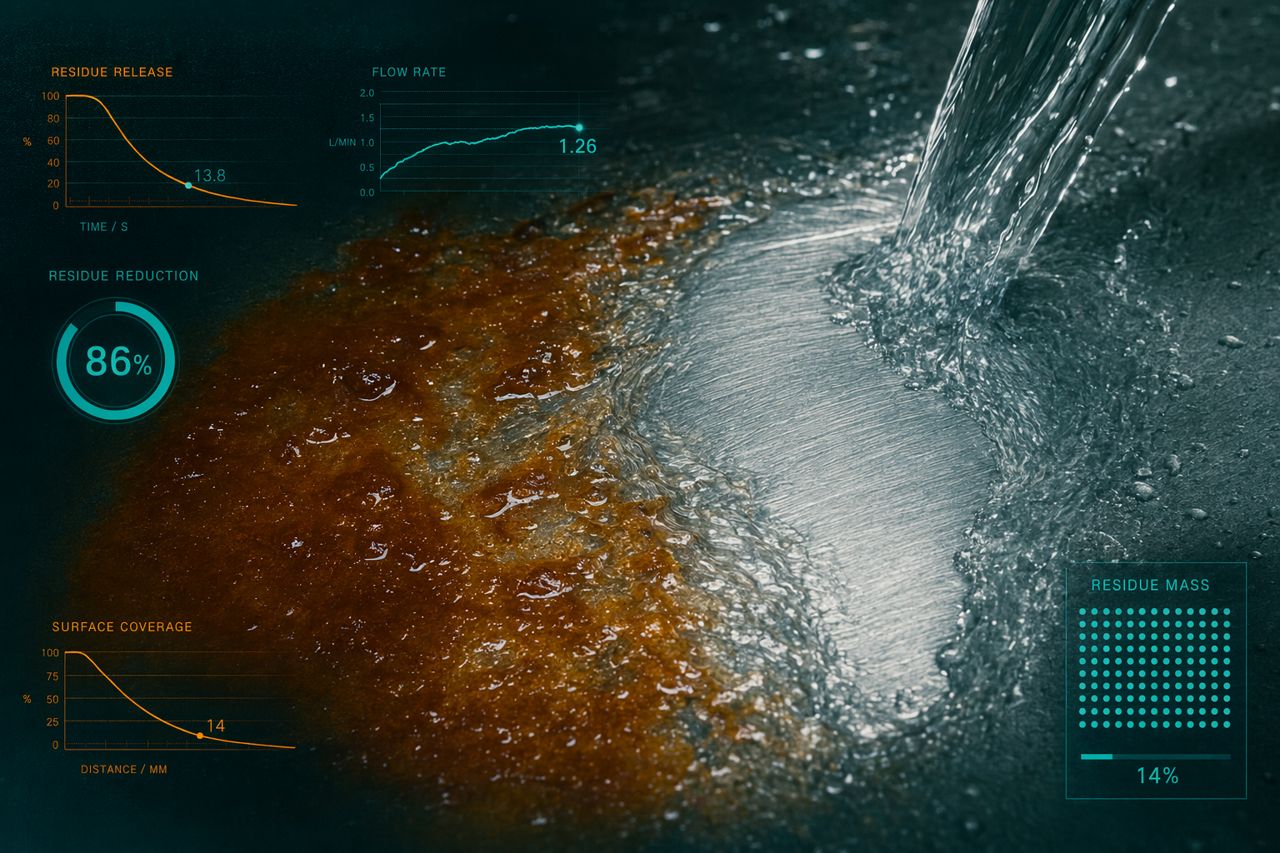
Precision mannan breakdown for smoother industrial flow.
Tell us your application and volume — we reply with pricing and lead time.
We have received your message. We will reply by email.