How to Evaluate Mannanase for an Industrial Process
Mannanase is not a generic viscosity reducer. In the right matrix, Endo-1,4-β-Mannanase can open dense β-mannan structures, improve material flow, support nutrient release, and reduce processing drag. In the wrong matrix, it becomes an expensive line item with limited measurable value.
Buying for a plant or for resale? We supply mannanase in bulk for trials and production to manufacturers and resellers on a quote basis; send the application, quantity and destination. Request a quote.
This guide is for manufacturers, processors, distributors and resellers deciding whether to buy mannanase, and in what form, before they commit to a volume.
What mannanase is expected to do
Mannanase hydrolyzes internal β-1,4 mannan linkages in mannan-rich polysaccharides. Industrially, that matters when your process is constrained by:
High soluble fiber viscosity
Poor slurry movement or pumpability
Water-binding material that resists separation
Nutrient encapsulation in feed ingredients
Variable performance from guar, soybean meal, copra meal, palm kernel meal, coffee material, locust bean gum, or other mannan-containing inputs
Inconsistent yield, clarification, or throughput caused by changing raw materials
The evaluation question is not simply, “Does it break mannan?” The useful question is: does it improve the process outcome that pays for the enzyme?
Start with the industrial objective
Before comparing suppliers, define the commercial result you need. Common evaluation targets include:
For animal feed
Reduced anti-nutritional effect of β-mannans
Improved nutrient accessibility from plant-based meals
More stable feed conversion assumptions across variable raw materials
Lower formulation risk when using alternative protein or fiber sources
For food, beverage, and extraction processes
Lower viscosity during hydration, extraction, or transfer
Improved separation, filtration, or clarification behavior
Better recovery from mannan-rich plant material
Reduced hold time or mixing stress
For industrial bioprocessing
More predictable slurry rheology
Improved substrate accessibility before downstream conversion
Reduced mechanical load in high-fiber process streams
If the target is vague, the trial will be vague. Tie the mannanase evaluation to one or two measurable process outcomes.
Map the substrate before selecting a product
Mannanase performance depends heavily on the substrate. Two process streams can contain mannan and still behave very differently.
Review:
Main mannan source and seasonal variability
Soluble versus insoluble fiber contribution
Particle size and hydration behavior
Presence of galactomannans, glucomannans, or mixed cell-wall structures
Heat exposure before enzyme contact
Contact time available in the actual process
Whether other enzymes are already in the formulation
A strong evaluation begins with the material reality of the plant, feed mill, premix system, or extraction line — not with a catalogue comparison.
Check the process window
Mannanase should be assessed under conditions that resemble the real process. Focus on:
pH compatibility: does the enzyme remain useful in the process environment?
Thermal fit: will it survive the relevant processing steps or act before heat exposure?
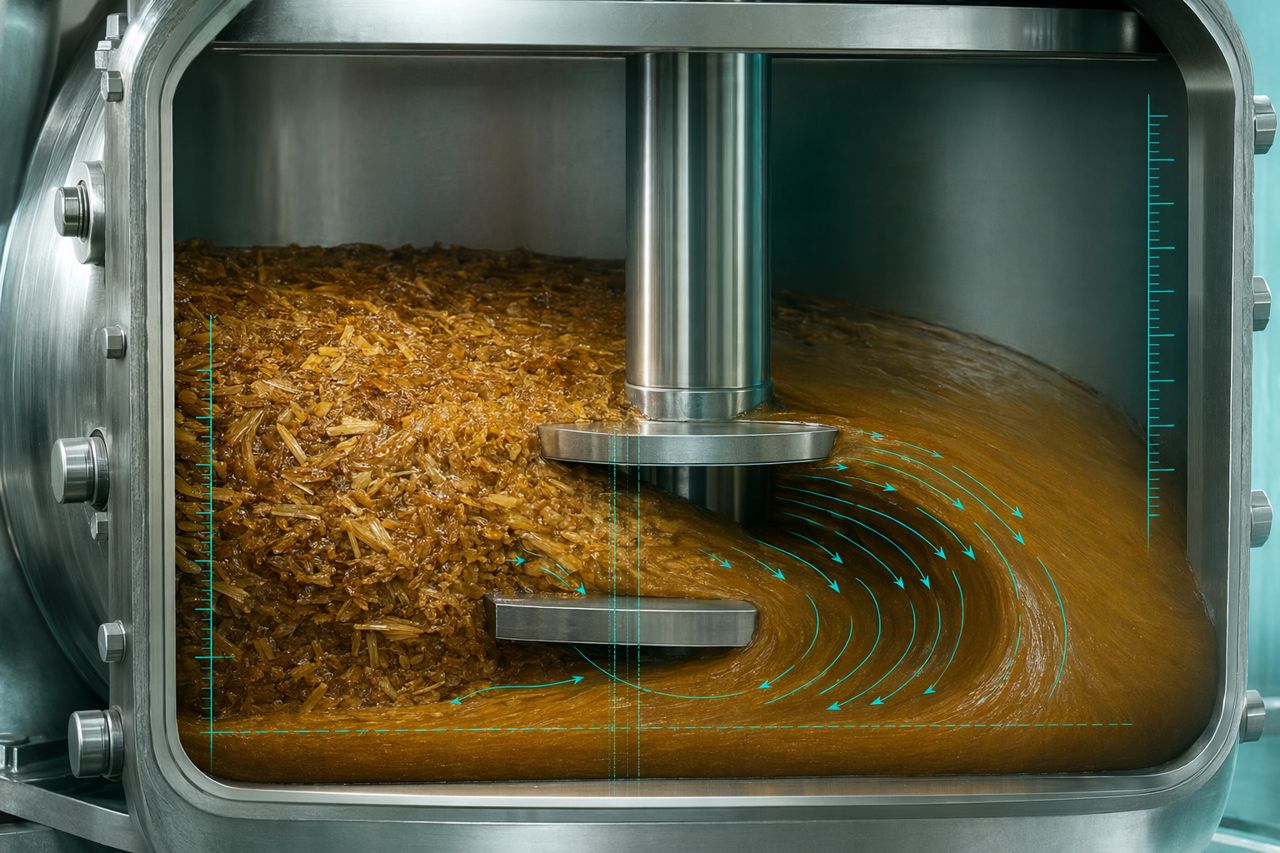
Moisture and mixing: will the enzyme contact the substrate evenly?
Residence time: is there enough process time for the desired effect?
Formulation interactions: are acids, salts, binders, surfactants, preservatives, or other enzymes affecting performance?
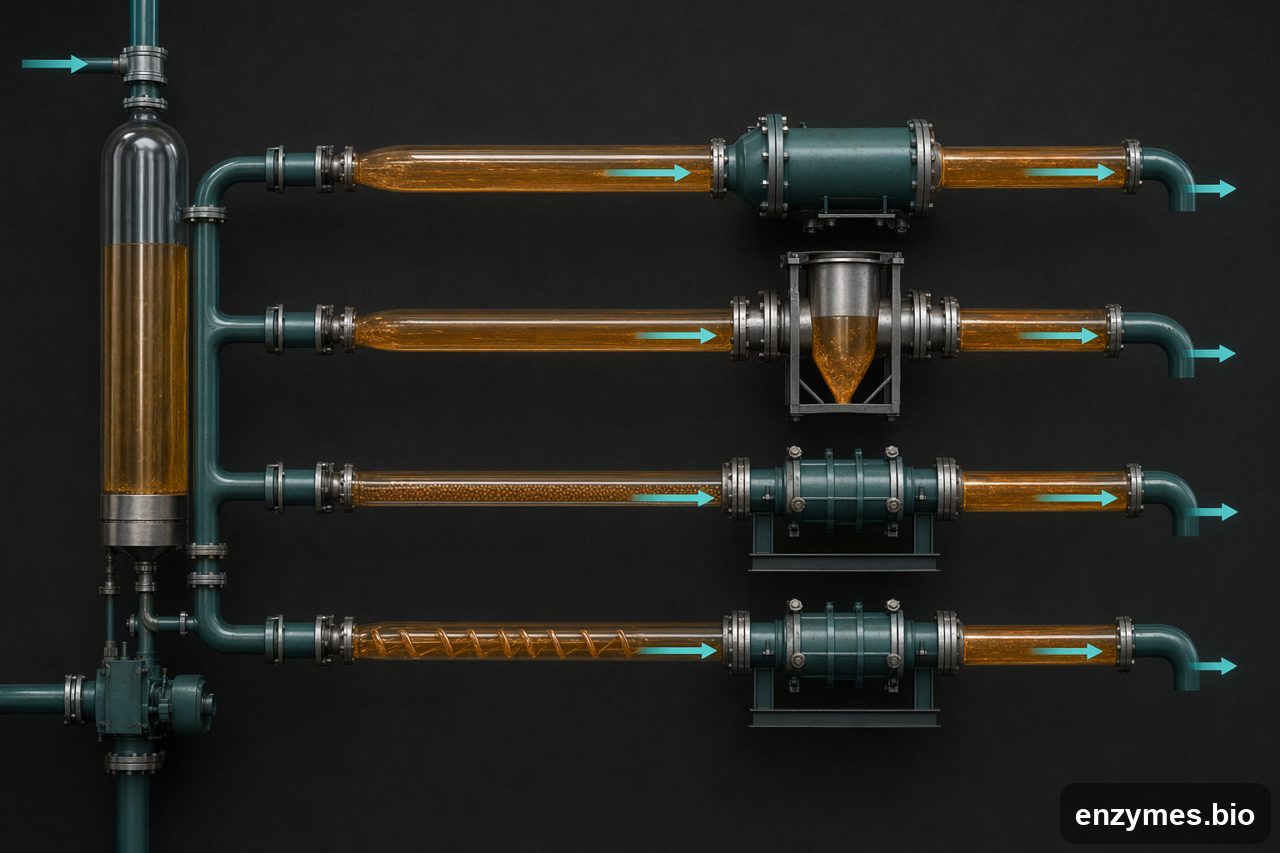
Physical format: does powder, granule, or liquid presentation suit the handling system?
Do not evaluate only on label strength or headline specifications. Industrial performance is created by fit between enzyme, substrate, conditions, and handling.
Build a side-by-side trial that answers a buying question
A good mannanase trial is not oversized. It is controlled, repeatable, and tied to procurement decisions.
Use a structure such as:
Baseline control without added mannanase.
Candidate mannanase condition under normal process assumptions.
Alternative dose-response points if allowed by the formulation and economics.
Existing enzyme blend condition if the process already uses xylanase, cellulase, protease, amylase, or phytase.
Stress condition using a more difficult raw material lot, higher fiber inclusion, or shorter contact window.
The aim is to identify the operating range where mannanase produces a repeatable process advantage, not a one-off best case.
Measure outcomes that matter commercially
Select endpoints that match the application.
Feed evaluation endpoints
Ingredient flexibility
Nutrient release indicators
Litter or manure consistency observations where relevant
Feed conversion assumptions from controlled feeding data
Pellet process compatibility and post-processing performance
Consistency across raw material lots
Process and extraction endpoints
Apparent viscosity trend
Slurry flow behavior
Separation or filtration time
Yield or extract recovery
Clarification behavior
Pumping, mixing, or transfer stability
Downstream fouling or residue behavior
Procurement endpoints
Cost-in-use, not just pack price
Supply reliability
Batch consistency documentation
Storage and handling requirements
Regulatory and market documentation fit
Technical support during scale-up
The preferred product is the one that delivers the best controlled outcome at an acceptable cost-in-use and supply risk profile.
Watch for common evaluation mistakes
Avoid these failure points:
Comparing mannanase products only by stated activity
Running trials in clean model substrates that do not represent the plant stream
Ignoring pH shift during processing
Adding enzyme too late for meaningful contact
Evaluating only one raw material lot
Measuring viscosity without linking it to throughput, yield, or formulation value
Assuming one mannanase behaves like another in complex fiber systems
Selecting the lowest price without calculating process return
Mannanase evaluation rewards disciplined design. Small differences in trial setup can decide whether the enzyme appears useful or invisible.
What to request from a supplier
Before purchase, ask for:
Recommended application range for your matrix
Physical format options and handling guidance
Stability guidance for your process sequence
Compatibility notes with other formulation components
Documentation for food, feed, or industrial use as applicable
Lot traceability and quality system information
Support for pilot testing and scale-up review
A credible supplier should help translate your process conditions into a practical evaluation plan without forcing you into a generic specification comparison.
A practical evaluation sequence
Use this sequence when moving from research to sourcing:
Define the process bottleneck.
Confirm mannan-containing substrate relevance.
Shortlist candidate formats.
Run controlled benchtop or pilot comparisons.
Validate under realistic raw material variability.
Calculate cost-in-use against the process gain.
Confirm documentation, supply, and handling fit.
Move to production-scale verification.
This keeps the decision technical, measurable, and commercially defensible.
When mannanase is a strong fit
Mannanase is worth serious evaluation when the process contains mannan-rich plant material and the business case depends on flow, release, consistency, or ingredient flexibility. The strongest cases usually involve a defined bottleneck, a variable fiber source, and an existing measurement that can show improvement.
If the raw material does not contain meaningful mannan structures, or if the enzyme cannot contact the substrate under process conditions, the case is weaker.
Request a wholesale quote
We supply mannanase for feed, food, extraction and industrial lines in bulk to manufacturers, distributors and resellers, on a quote-only basis. To get a grade recommendation and a price, send the product or application, the quantity (trial lot, monthly or annual volume), the destination country, and the process step where the enzyme will be added. Form and pack size are quoted per order, and we tell you which documents are available for that grade.